

Singapore is where I grew up, and where my interest in people, culture and belonging began. Today, my work brings together service design, policy and inclusive leadership - helping people connect what they learn with the services they’re responsible for improving.
Through my experience delivering the Service Designer apprenticeship in the UK, I support civil servants and public-sector professionals to apply theory to real organisational projects.
I’d love to bring that experience home, working with partners in Singapore to develop practical service design learning for people emerging in the field.
bringing a global perspective home.
services that work for everyone.
Growing up in Singapore shaped how I think about difference. Sharing a country doesn’t mean we all experience it in the same way.
Our language, culture, age, disability, family circumstances and familiarity with systems can influence how we experience a public service. Understanding those differences means asking questions, listening carefully and involving people in the work.
That thinking runs through my approach to service design: understanding how a service fits into someone’s life, alongside the policies, processes and people needed to deliver it.
bringing the dialogue home.
I’m interested in working with public-sector organisations and learning partners in Singapore to develop a programme for civil servants and professionals beginning their service design practice.
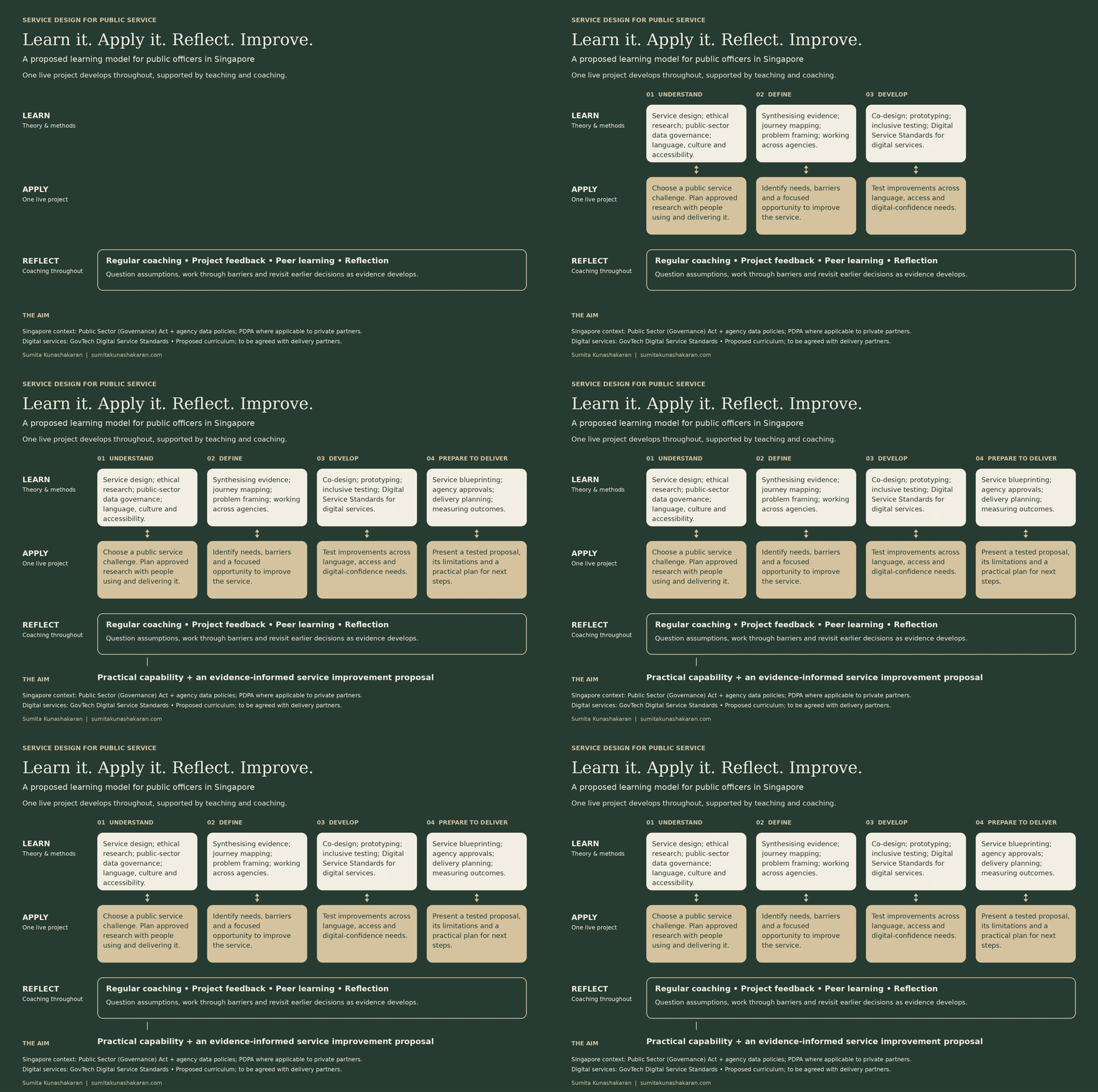
You’d bring a real service challenge into the learning, apply methods as you go, and receive coaching and feedback throughout. Together, we’d connect research, problem framing, collaborative design, prototyping and planning for delivery.
The format, duration and curriculum would be developed with local partners, drawing on my UK teaching experience and shaped around your organisation’s context.
one people. many lives. better services.
Understand the service
Explore service design principles, research ethics and inclusive research through Singapore’s multicultural context. Understand how language, age, disability, family circumstances and confidence with technology shape people’s experiences of public services, without assuming that people from the same community share the same needs.
Define the challenge
Bring research findings together, map the current experience and identify where people face barriers. Look across digital services, physical touchpoints and agency responsibilities to understand the whole journey. Develop a clear problem statement grounded in evidence rather than assumptions about what people need.
Develop and test ideas
Work with people using and delivering the service to explore improvements. Create prototypes and test them with people whose languages, cultural backgrounds and access needs reflect the service’s users. Explore what works, what causes confusion and where human support still matters.
Prepare for delivery
Connect improvements to the policies, processes, people and systems needed to make them work. Consider agency responsibilities, data protection and how different organisations would work together. Develop practical next steps and ways to evaluate whether the service becomes easier to access and use.
Accessibility, cultural awareness, meaningful involvement and reflection would run throughout the curriculum, grounded in the everyday realities of Singapore’s communities and public services.
beyond “can or not?”
You’d work towards:
Understanding where people get stuck.
Confidence choosing methods that fit the challenge, rather than jumping straight to a solution.
Designing with different languages, cultures, ages and levels of digital confidence in mind.
Evidence to explain your recommendations and bring colleagues across teams and agencies along.
A practical plan for what to test, change and take forward.
You’d bring a real challenge from your agency, with teaching, coaching and feedback to help you work through it. The aim is to make everyday services easier for the people who rely on them.
Taking the work further would depend on your findings, agency approvals and available resources.
better services, for our everyday lives.
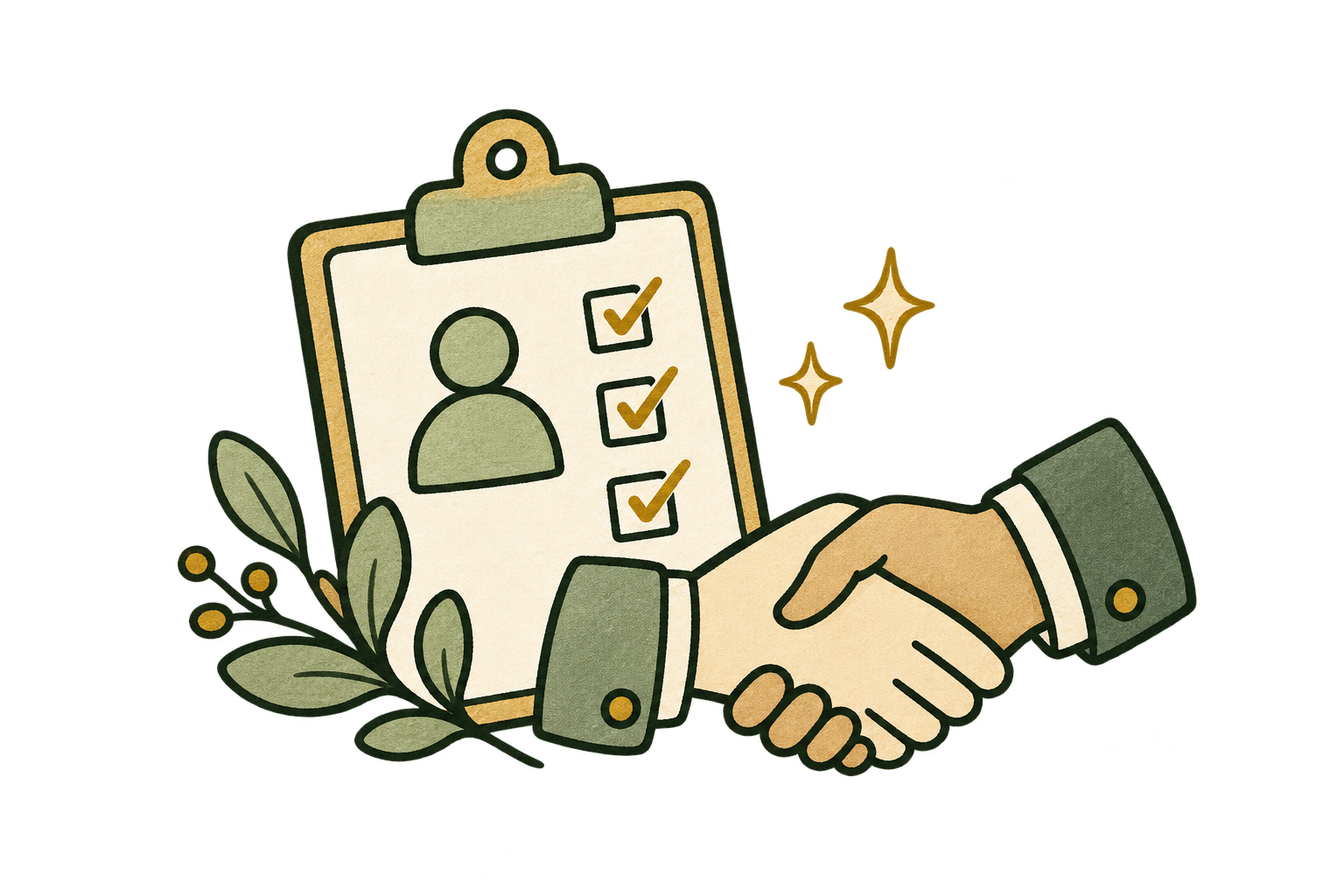
identifying skills beyond the interview
A learner at Worcestershire County Council explored how care recruitment could better recognise practical ability, transferable experience and values.
The project considered combining structured questions with practical activities, giving candidates different ways to demonstrate their suitability for the role.
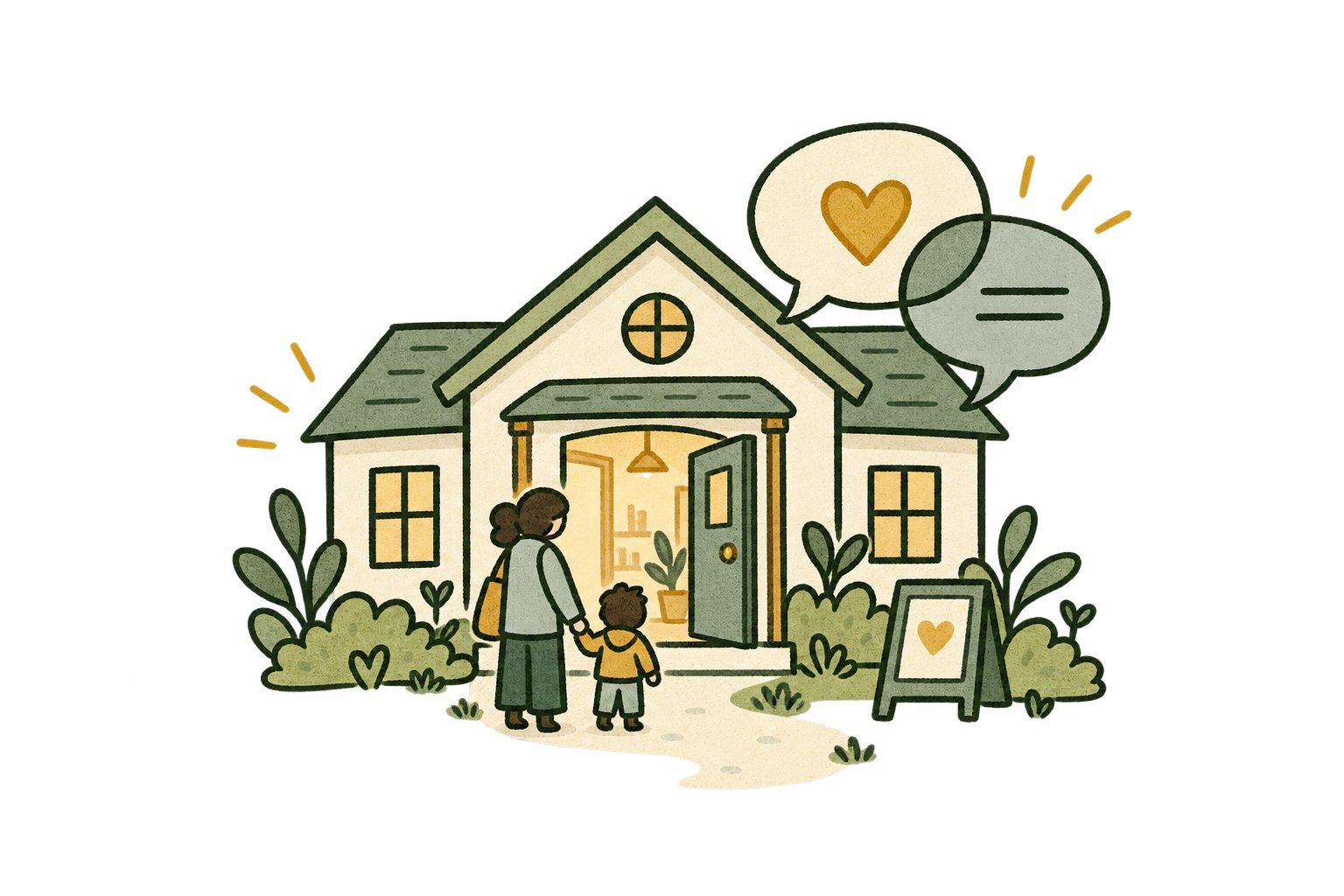
making family support easier to access
At North East Lincolnshire Council, teams explored how families register for Family Hub services.
Working with families and business support colleagues, she gathered feedback on a simpler membership form. The work highlighted unclear wording, language barriers and assumptions about family size; connecting everyday design decisions with access to support.

building skills from different starting points
At Arqiva, learners developed an induction approach for a newly formed Service Lifecycle Management team.
Proposals combined clear competencies, mentoring and a practice project, with support tailored to existing skills. Feedback from team leaders helped shift the design towards a more flexible approach to developing capability.
Let's Shape This Together
✶
Let's Shape This Together ✶
Are you developing service design skills in your team, supporting emerging practitioners or exploring a more practical approach to professional learning?
I’d love to hear what you’re working on and explore what we could build together in Singapore.